experience design
#user-research
#microinteractions
role
Research design
UX design
tools
Figma
timeline
Summer 2023,
10 weeks
overview
This team project explored digital interaction methods suitable to enhance the customer experience of Casual Games, a board game store in Coquitlam, BC. Through user research, we developed and refined a final proposal designed to meet their business needs.
01 client background.
business challenge
As a growing small business, the co-founders, Jeremy and Teile were eager to collaborate with our team to find new innovative ways to improve their marketing plans and increasing store traffic. As a company, they aim to create a comfortable space for hobbyists of all interests and nature, through providing friendly support from staff, accessibility, and a fun experience.
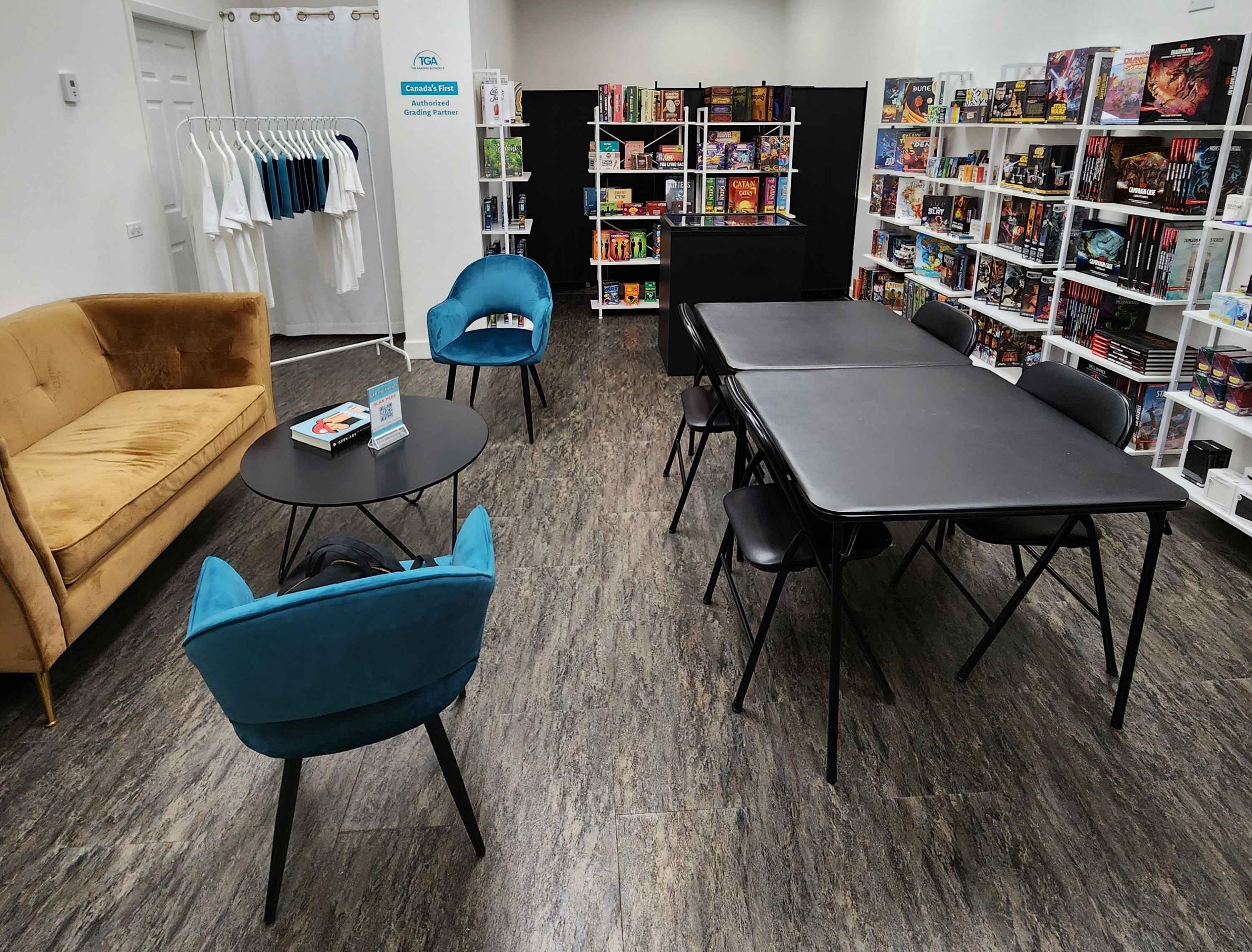
Photo of the Casual Games store taken by me.
02 design research.
interview with casual games
I found that several marketing strategies have already been implemented, like brand awareness. To create a distinction from competitors like Mostly Games, located 5 minutes away walking distance, creating a strong brand identity was needed. Rather than a traditional board games store, Casual Games wanted to create a premium shopping experience. Currently, the company sees most of their sales through their online store, while store traffic and sales mainly come from game event nights.
identifying the customers
A Google Forms survey was used to reach out to some of their existing customer base. We managed to receive a total of 5 responses, with 2 indicating that it is their first time visiting the store. They stated that the staff was friendly, they like to see what products the store has, and they hope to attend an event but wishes there was a better listing of all upcoming events.
area of intervention
Through insight from the survey responses and my observations, although I found that their lounge area provided Casual Games’ value of creating a comfortable environment for hobbyists to socialize and have fun, the organization of merchandize on the shelves may not be accessible enough for new hobbyists. Merchandizes are organized by new items and bestsellers in the front and sectioned by board game genres in the back of the store. However, he store lacks labels and touchpoints to convey this information to first-time customers. Additionally, listing of events are only displayed on their website and there is lack of indication of attendance number and whether the event is beginner friendly.
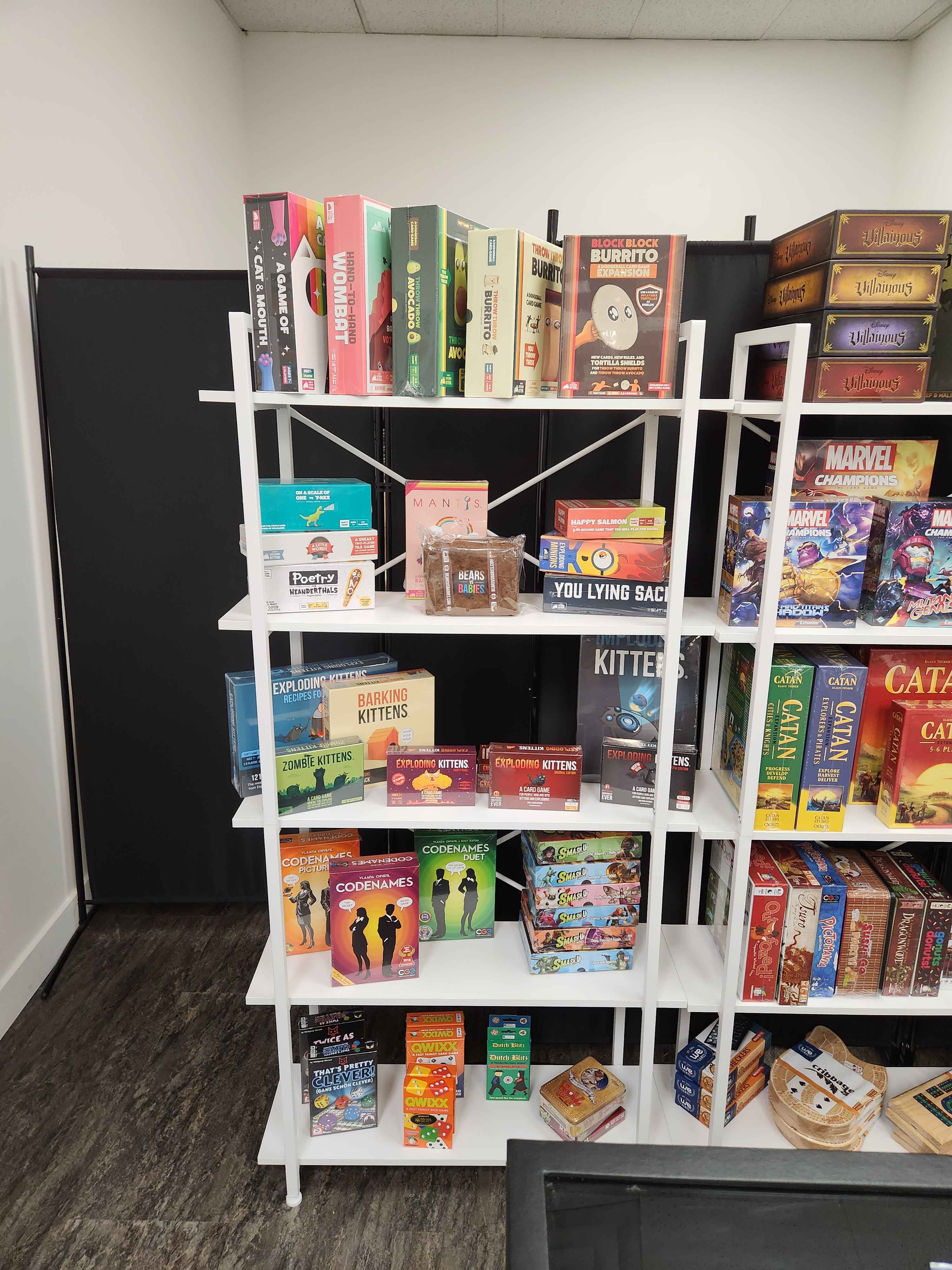
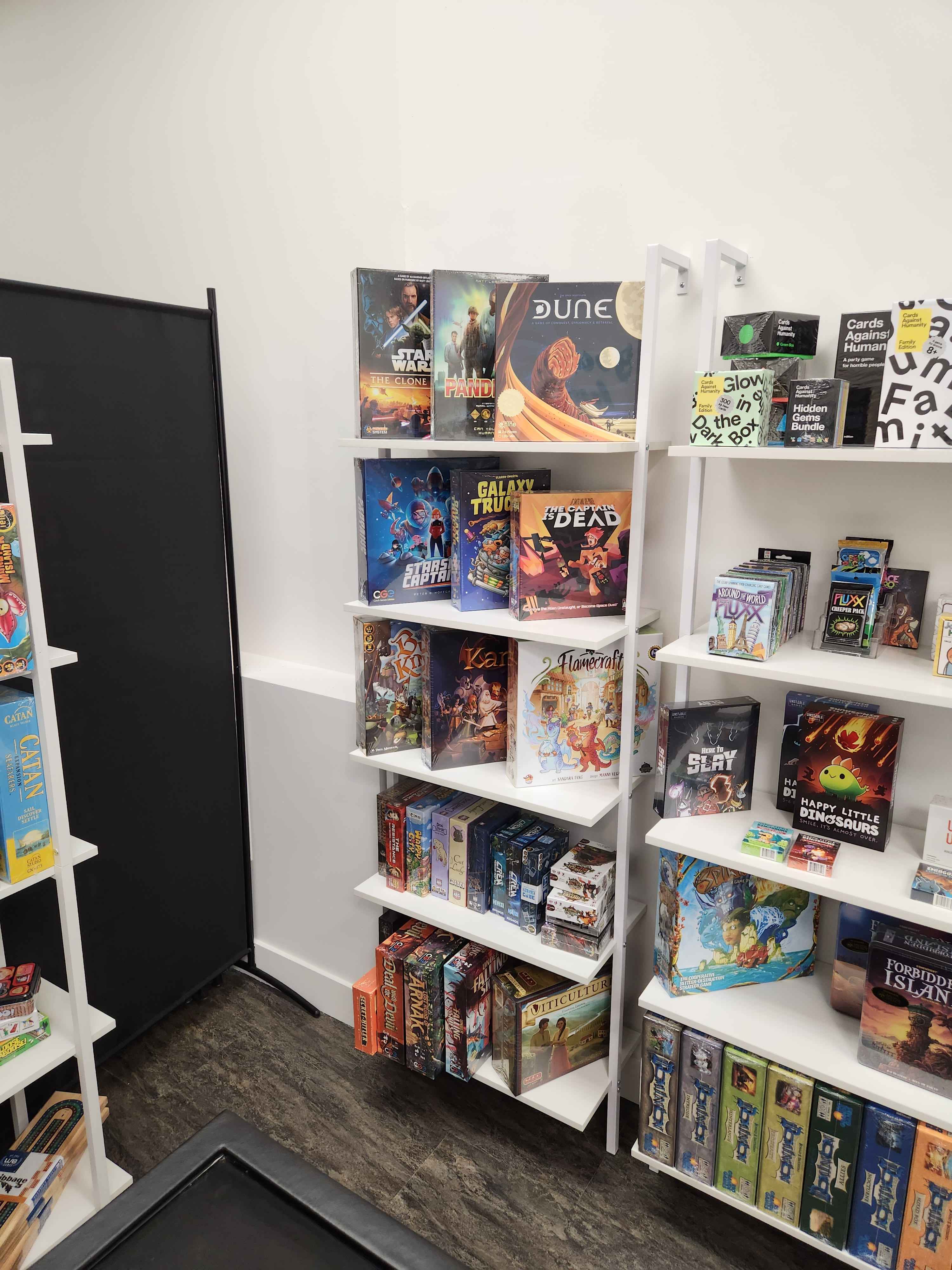
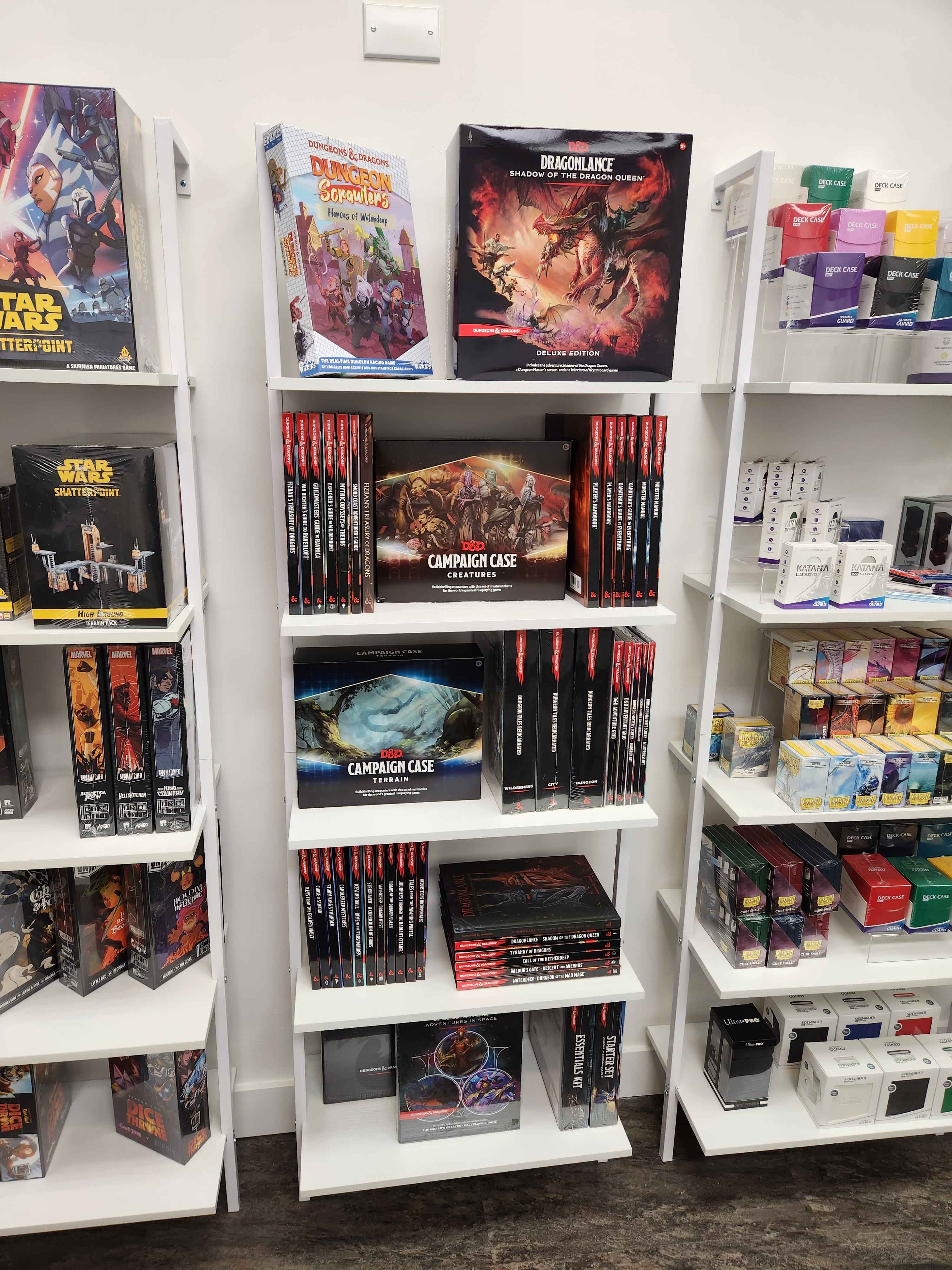
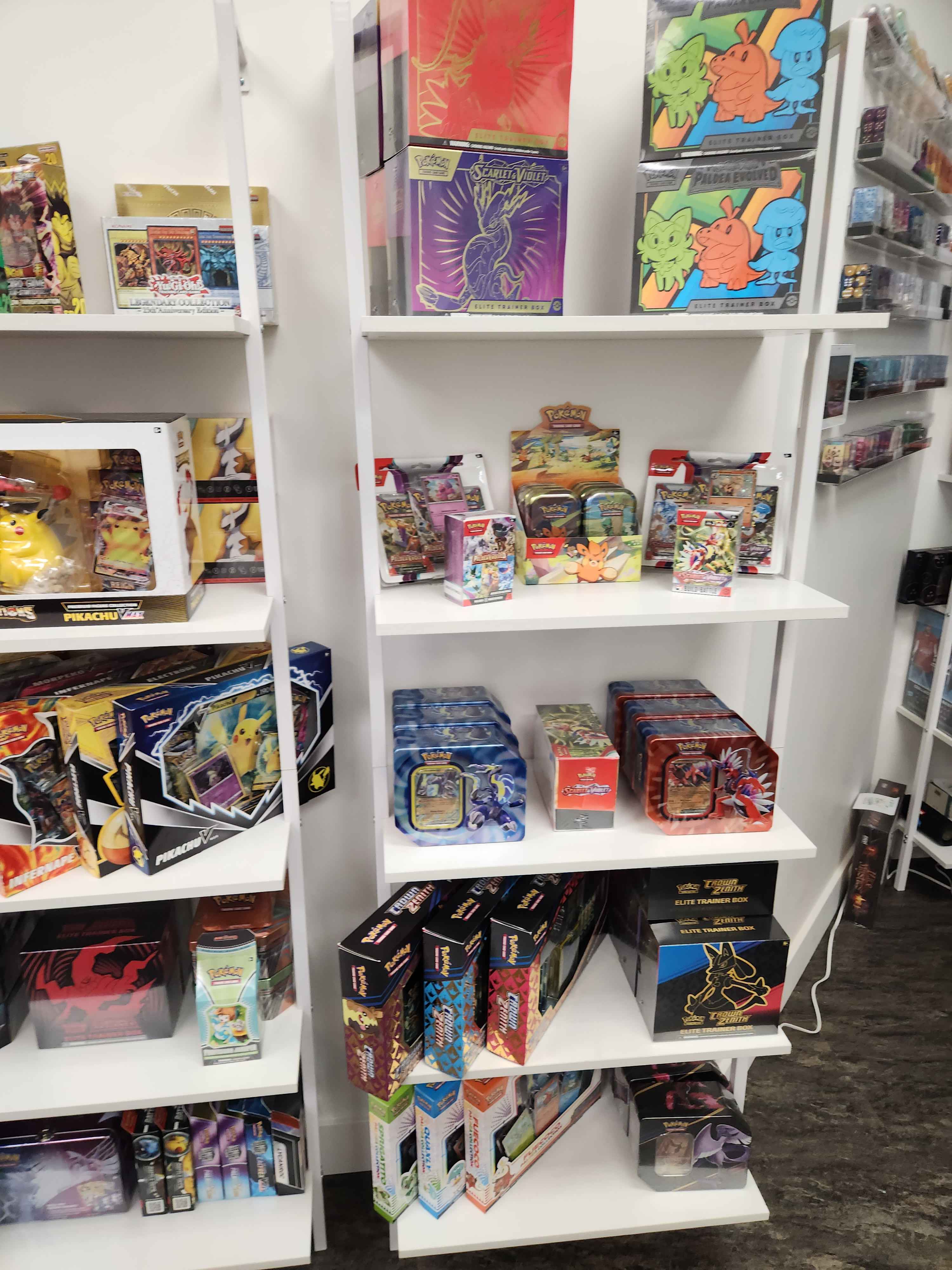
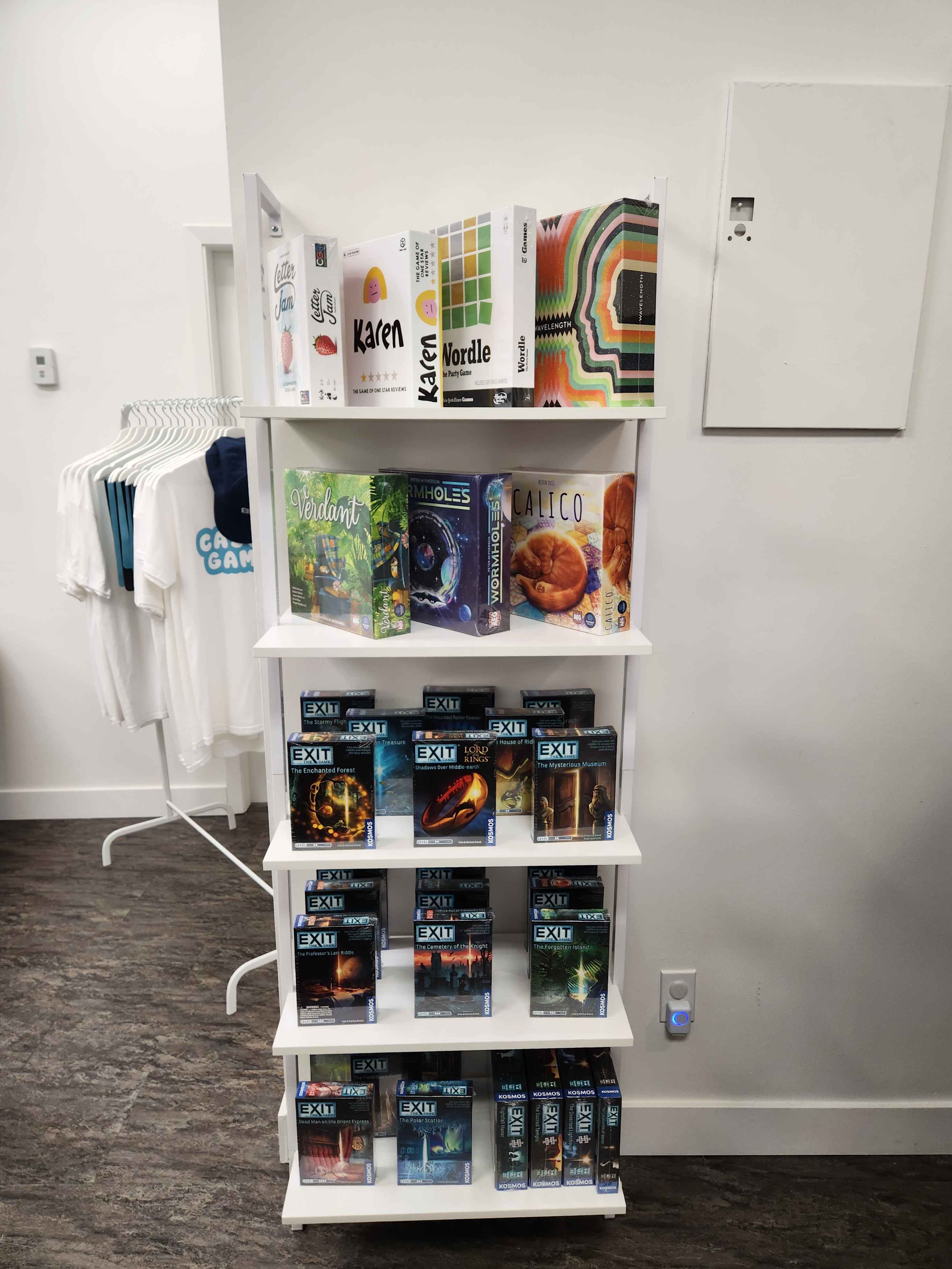
Photos of Casual Games' merchandise shelves taken by me.
03 design methods.
initial framining
analyzing customer journey maps
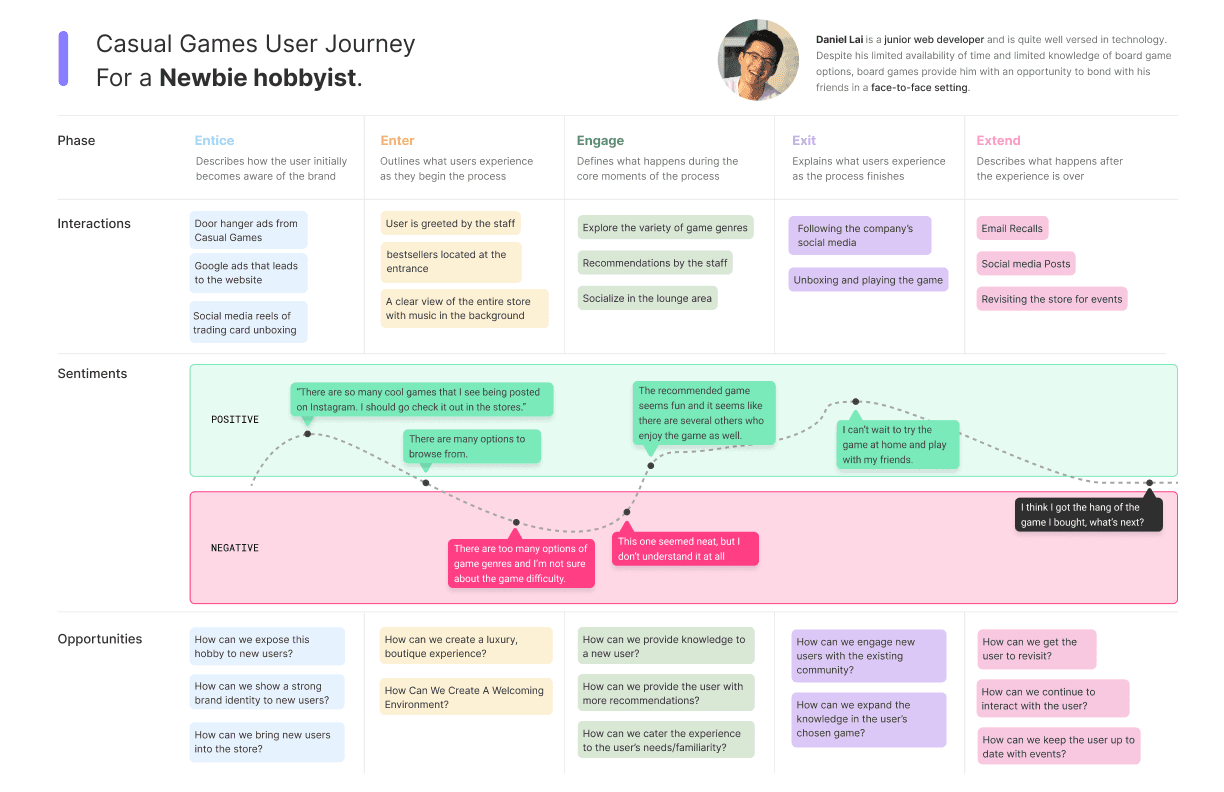
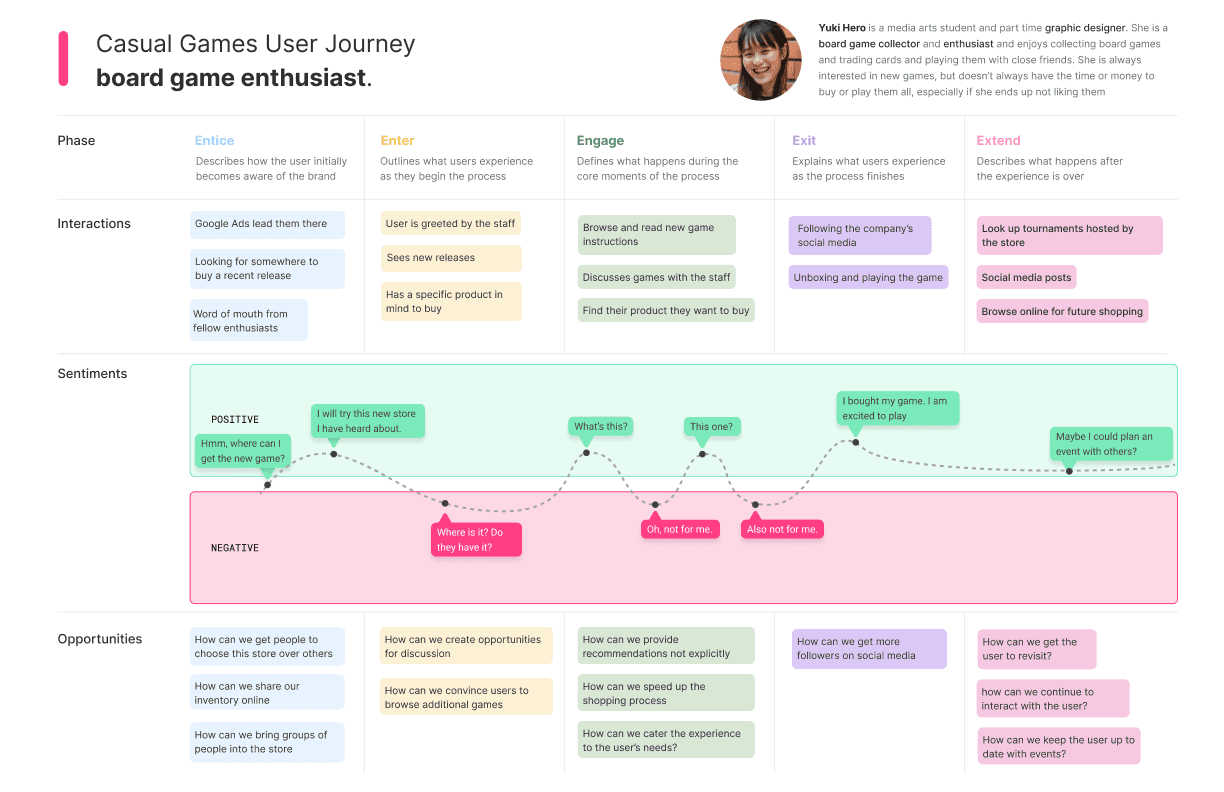
proposed methods
Method #1: Curated recommendations
By analyzing the user’s available time, complexity preference, genre preference(s), desired player count, and more, we hope to provide the user with a curated selection of board games that would suit their needs and to categorize the store’s user base for future effective marketing strategies. These can be given a “class” or type, which games can be labelled as to allow easy curation.
Method #2: Social interaction for tutorial nights
This method would be on helping new hobbyists become more accustomed to some of the more complex games with in-person interactions by offering game nights where people can come in and specifically learn about the games in a safe and patient environment. This eliminates the pain point of worrying about having to played with skilled players.
Method #3: Community identity
To bring users into the physical store and to help the user in gaining more information about the current bestsellers specifically by describing the objectives of the game, allowing for an increase of user interaction with the store itself.
04 refined design focus.
refined framing
Through continuous feedback with the teaching team and peers, our group narrowed down and refined our design focus and expanding on design method #1: curated recommendations.
opportunity statement
By creating microinteractions within the space to enhance the experience, visitors can feel more satisfied by their visit and be enticed to further explore the offerings within the store, while maintaining Casual Game’s mission of building relationships and providing a fun environment for their customers.
ideation & precedents
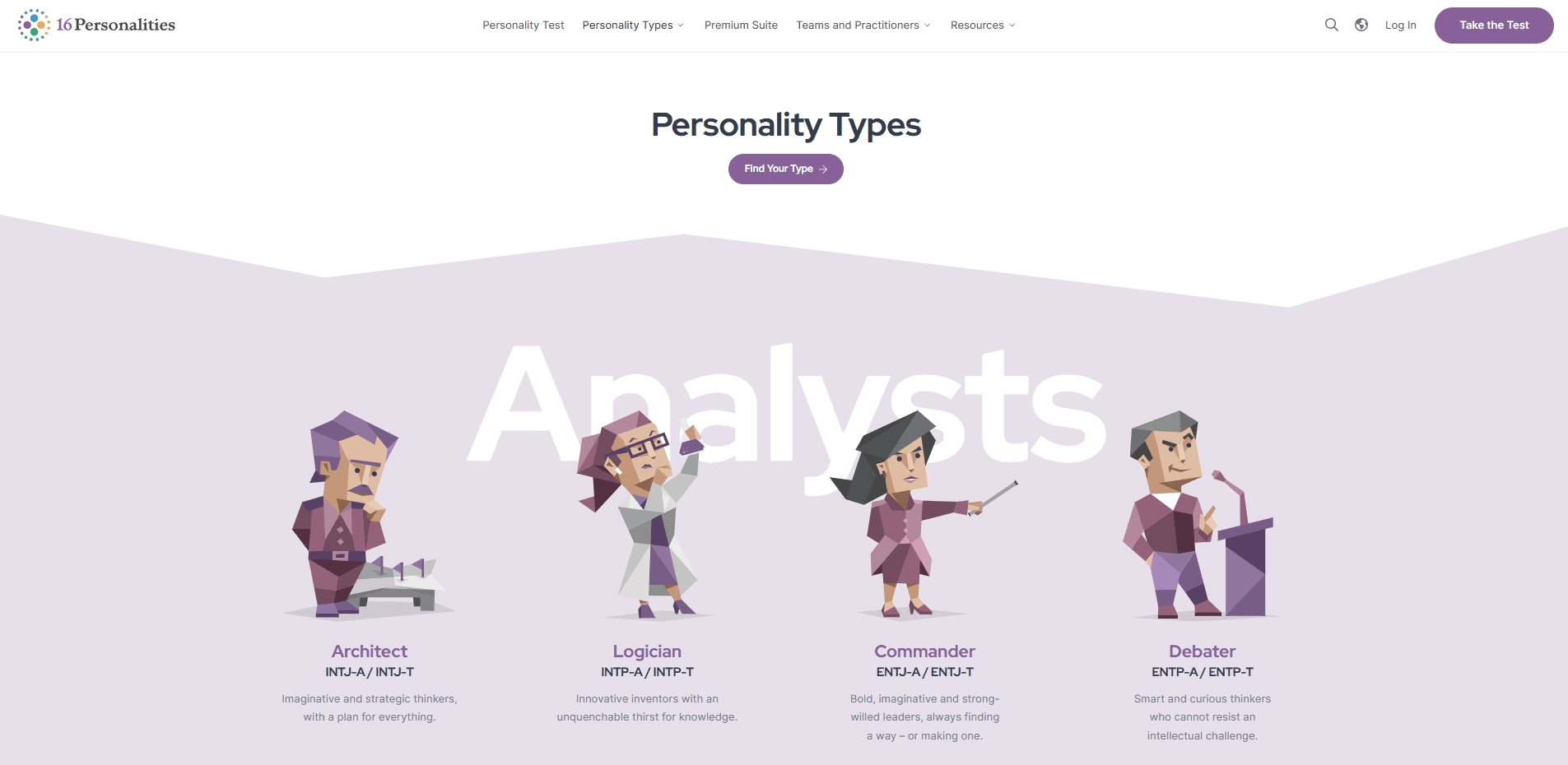
16 Personalities Personality Test to MBTI (Myers-Briggs Type Indicator).
The MBTI test is a widely known and popular method of determining one’s personality by associating with one of their 16 personality types. Due to its rising popularity, it is not only a useful tool for self-reflection and understanding, but acts as a tool for ice breakers and social activity.
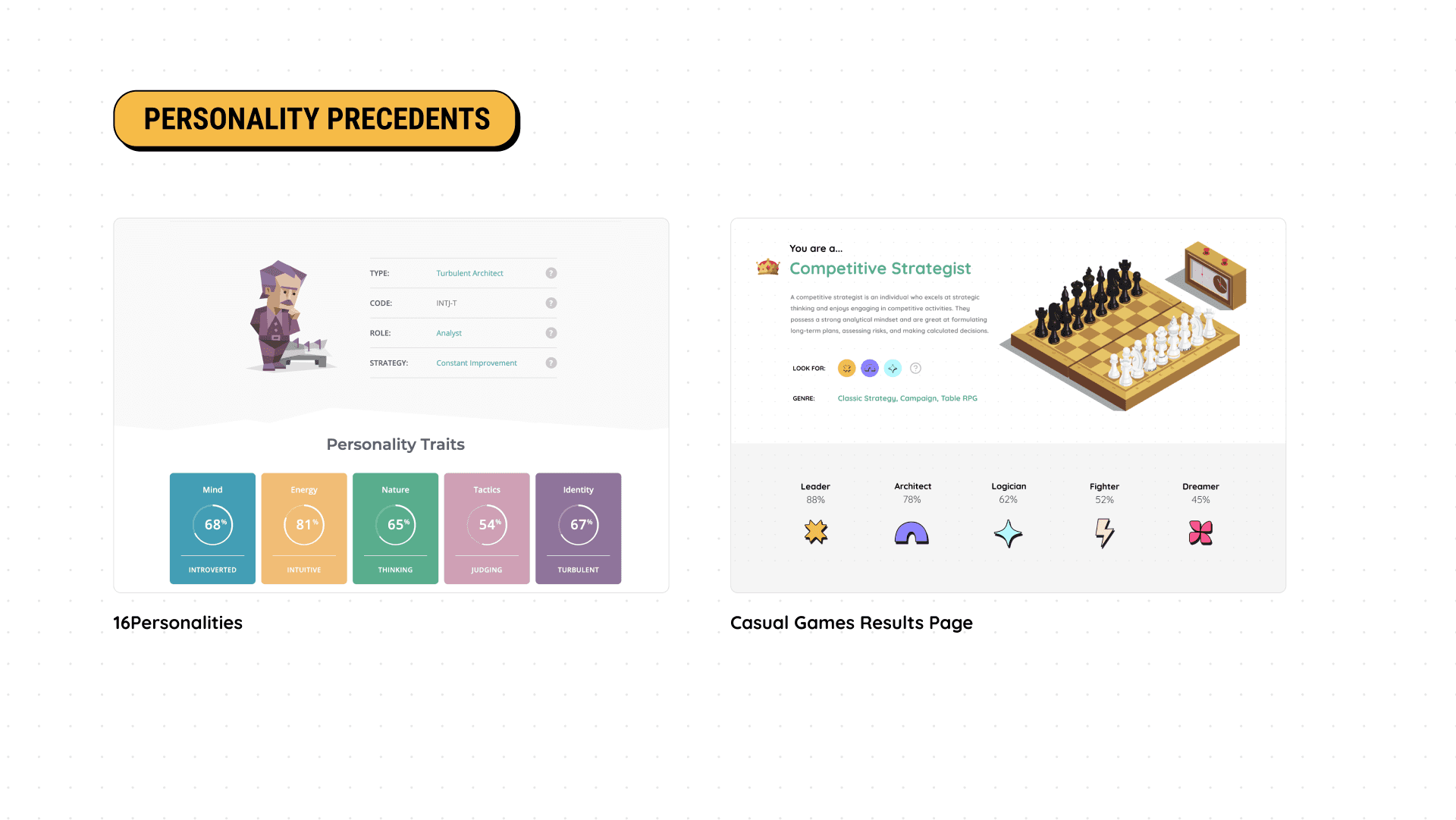
Our team took this as an opportunity to recreate this tool using gamer “types”. By associating an individual with a gamer type, it makes it easy to provide the appropriate game recommendations catered to what that type likes through both the online and physical store.
05 solution.
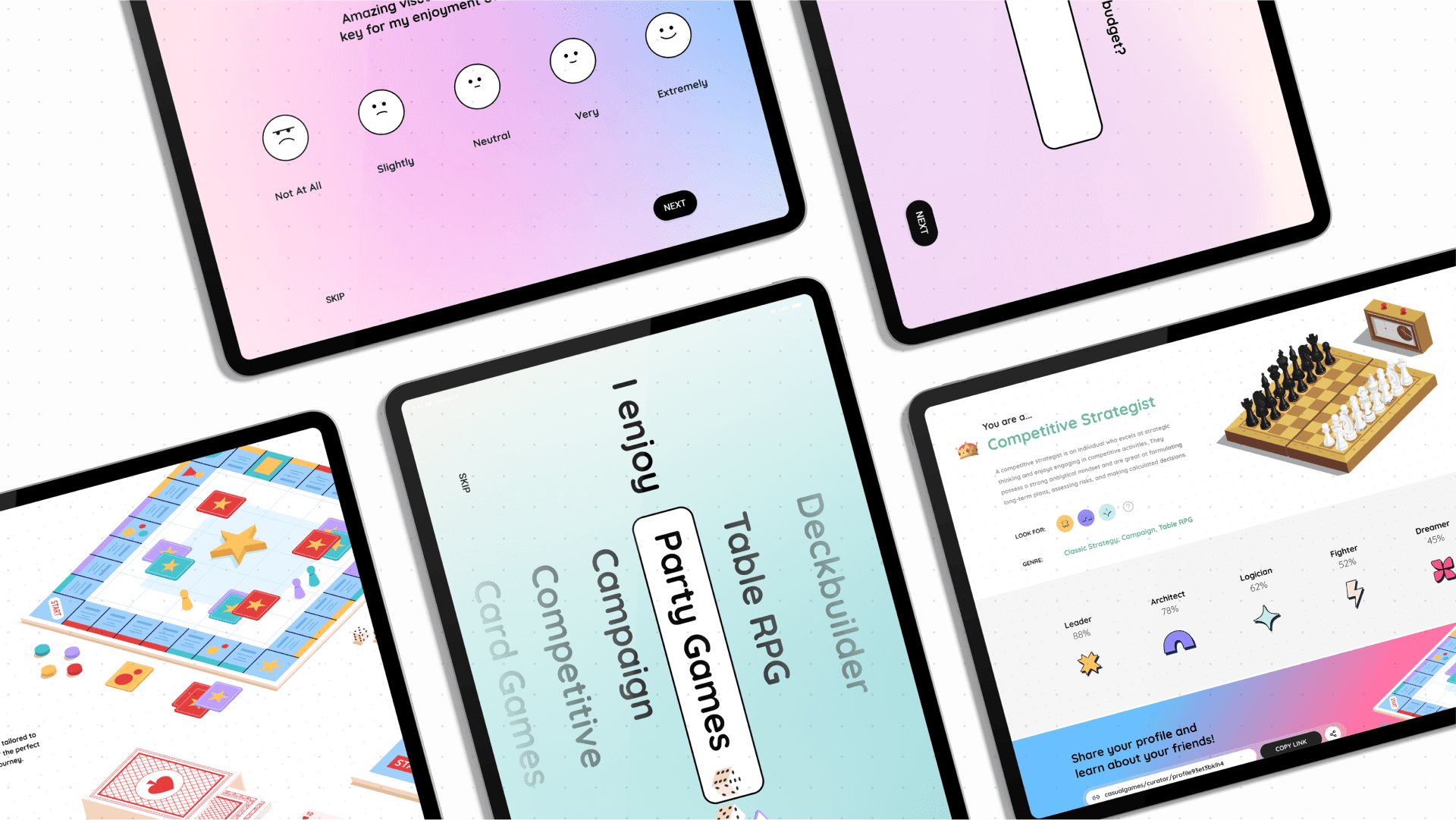
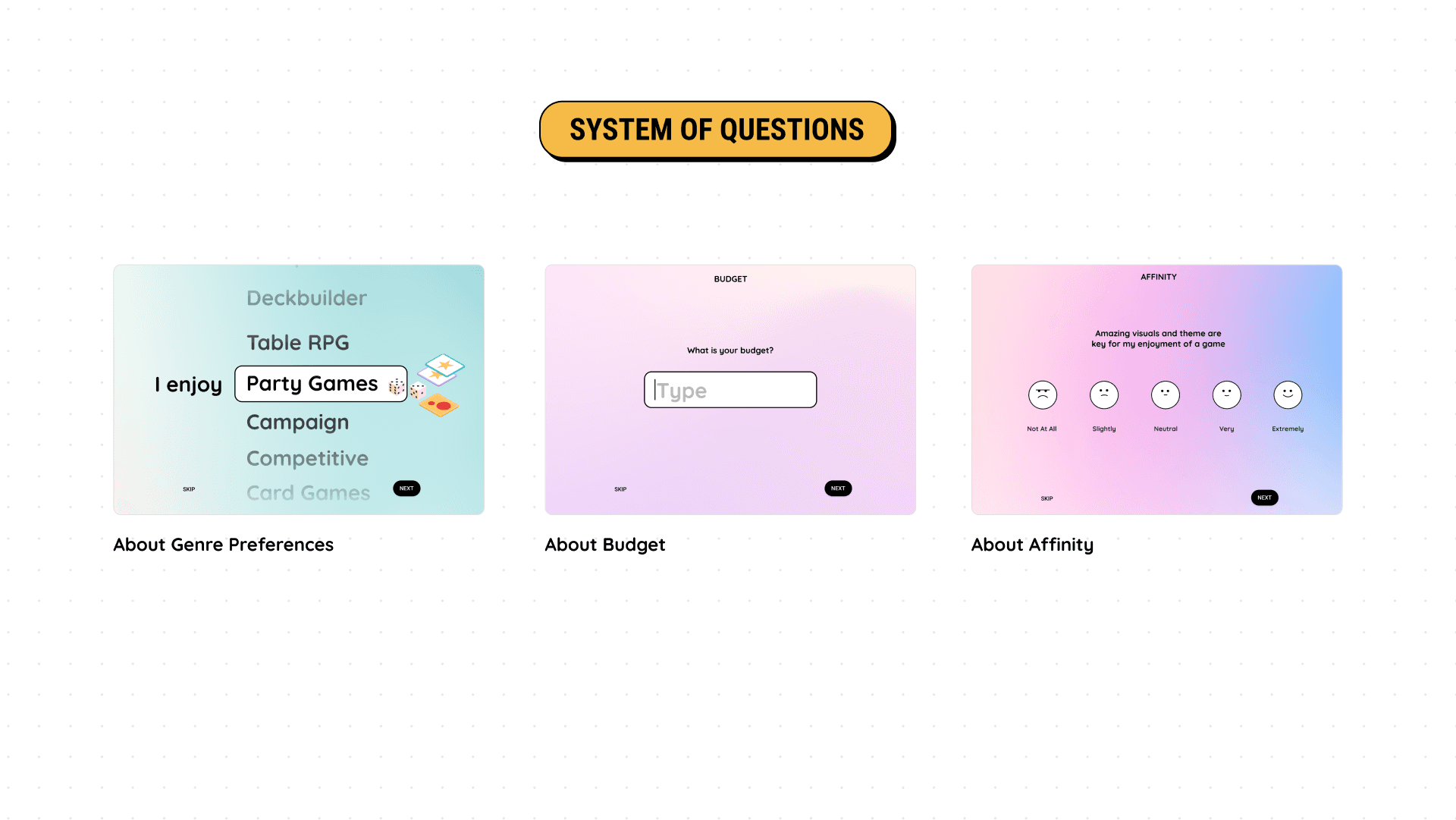
The Board Game Curator is a tool that determines the user’s gamer type through a series of questions like genre preferences, budget range, and affinity questions using a rating scale. Once a gamer type is determined, the customer can use the corresponding gamer type symbol to find their recommended game selections in the online and physical store.

Game type symbols created by group member, Andrew C.
value proposition
The Board Game Curator provides personalized game suggestions tailored to the individual’s preferences, ensuring that the individual discover the perfect board games for their unique gaming journey.
user journey map
Since Casual Games aims to create a novel experience to effectively captivate users who may not be familiar with board games, our strategy combines data and storytelling with visual graphics to convert those results into actionable insights that entices the customer to visit and buy from the store.
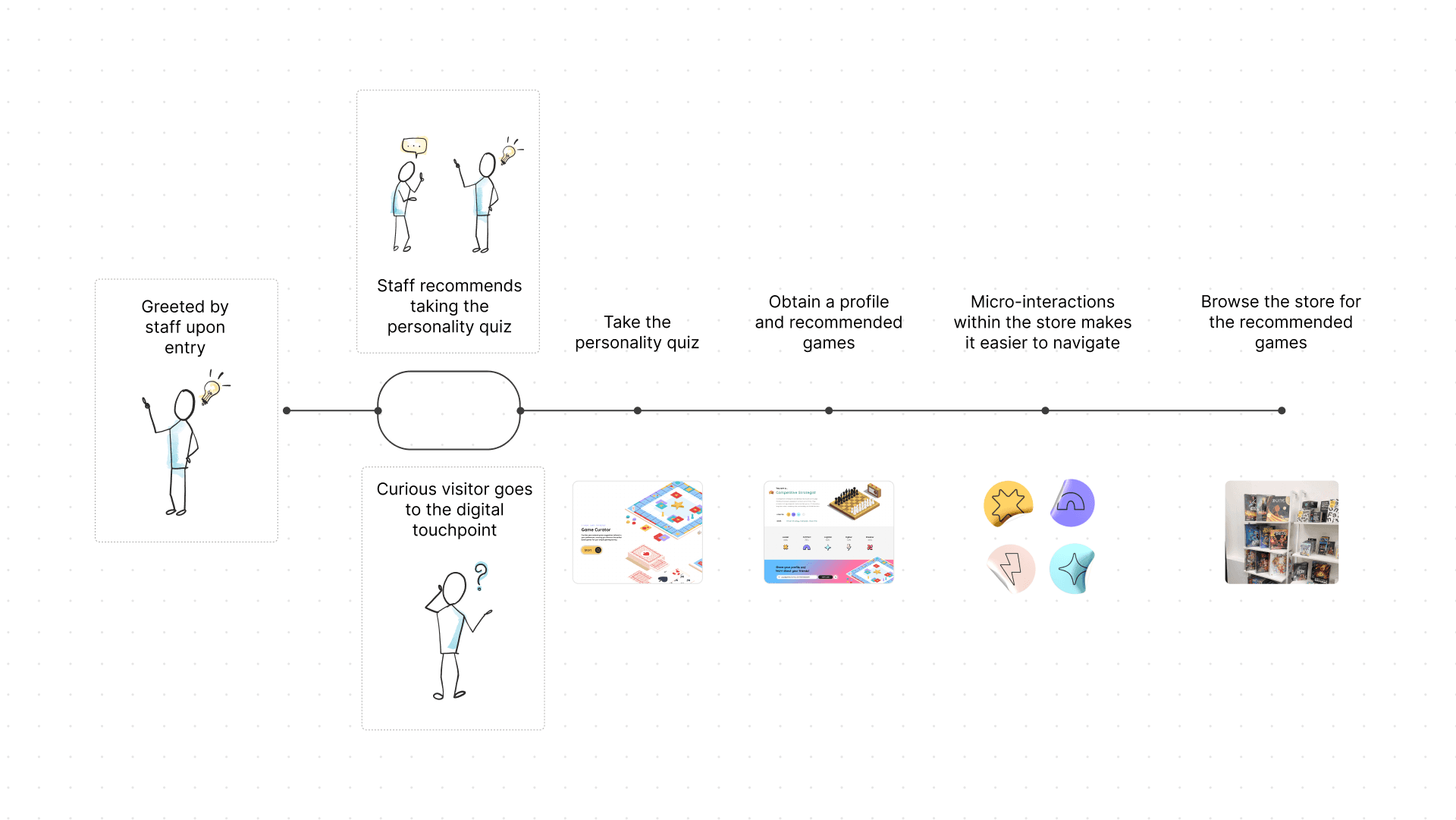
Proposed user journey map.
06 takeaways.
Our team chose Casual Games as our client due to our common interest of enjoying to play games, though the genre of board games was unfamiliar to some of us including me. I was able to dive deeper into this genre and really get to know the community behind it.
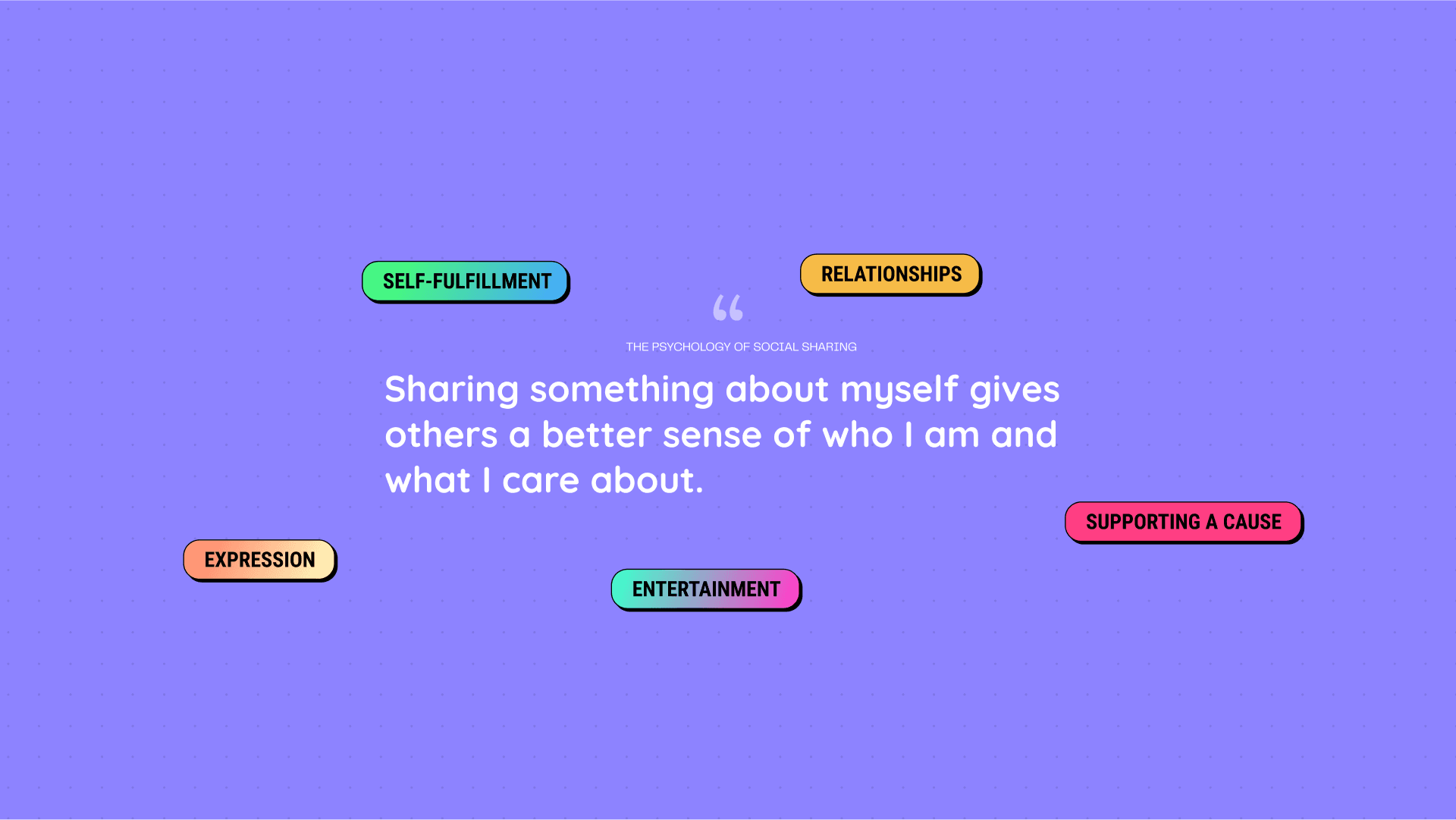
In our last critique session with our SFU Senior Design instructor, he acknowledged the novelty and unique direction of our project. As the proposed solution for Casual Games heavily emphasizes on to enhance engagement with the board games community, our instructor encouraged us to delve deeper into the scientific research to better understand the psychology behind people’s inclination to share personal traits and interests, as he thought that our Board Game Curator had a lot of potential to appeal to Gen Z customers.